Search results for: “Planning”

  • Speech at CLFS Autumn Confrence, London, 2017

    Speech at CLFS Autumn Confrence, London, 2017

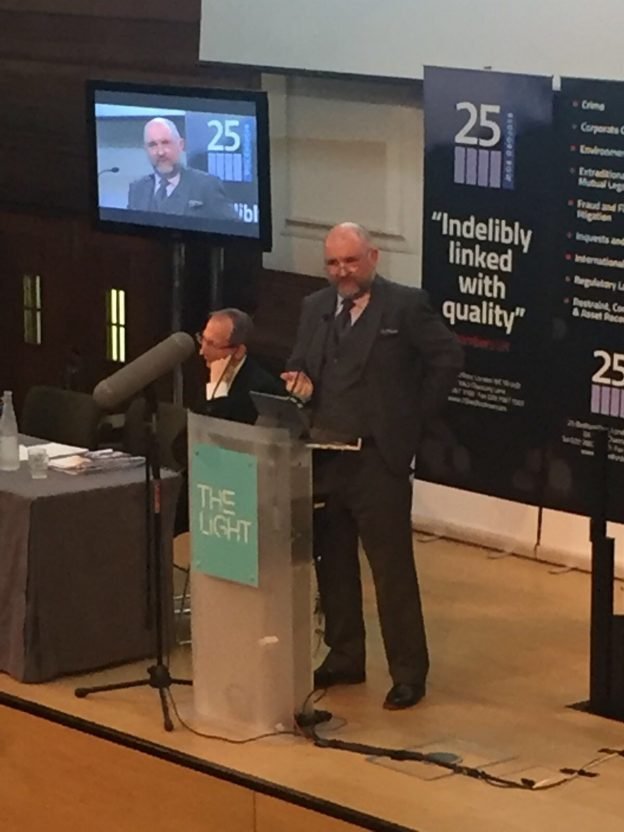
    I was invited (jointly with Greg Powell) to speak at this CLFS conference in the final speaker slot, on the topic of “unity, and changes ahead”

    Greg Powell spoke first, lambasting the MoJ for their announcement earlier in the week that following their LGFS consultation (and despite 97% opposition) they would cap payment at 6k pages of PPE. (For non criminal legal aid lawyers, this basically is yet another cut in legal aid payments) 

    The text of my speech is below:

    I am now all that stands between you and the Friday evening drink, and all that stands between you and the weekend. I therefore hope to be brief.
    Although probably not as much as you hope that I will be brief.

    Anyway, once again I have been asked to speak on unity in the profession. This year, clearly not to be trusted I am sharing with Greg Powell,  a hard act to follow.
    In the programme we are billed as the “two Gregs” – like the three amigos but less fun and without the sombreros.
    Or perhaps when you think of “Greggs” plural  you have an image of a couple of sausage rolls.

    I am no more qualified than anyone else to speak on the topic of unity.
    But I suppose being involved in a rep body- in my case the LCCSA-has given me some small insight into where we, as a profession, have successfully united, and where we have not, as well as whether it matters.

    I am also going to touch on breakfast Courts and the 14 hour rule for duty solicitors in the current LAA contract.
    And there will be a thinly veiled appeal to join and support the LCCSA.
    And in case none of that appeals I will have a go at Grayling.

    Unity

    Can we achieve it even between ourselves as criminal lawyers?
    It’s a good topic because we have much that divides us, not least healthy competition, but it seems to me that in recent years there has been an increase in shabby gamesmanship by unscrupulous client-chasers posturing as reputable lawyers but lacking integrity.

    A 1/4 century or so ago, when I was first attending courts and police stations, (back in the days when we were paid travel, waiting and a London allowance) other solicitor firms were rivals, but also friends and colleagues.
    people I could approach for advice, and who would gladly provide it.
    Nobody interfered with client choice or objected to a LA transfer.

    Now you can go to some Courts (one in North London comes to mind) and find an army of solicitors from a rival firm armed with clipboards hovering by the door of the court or by the notice-board with list of cases, tapping up all the clients and diverting first appearances from the duty.
    These are rivals but neither friends or colleagues.They are touts.

    These sharp practices, whilst deplorable, probably arise from the ceaseless cuts which lead to a race to the bottom, and the less scrupulous fighting like rats in a  barrel.
    But ignoring that debased minority, criminal lawyers nonetheless have much in common.
    The work we do, undervalued and underfunded though it is, is not merely a job, it is a profession and a vocation.
    We have, I think, uniting us, an overarching interest in justice.

    Of course we all have a degree of self interest, and we all would like to be well paid.
    Or at least properly paid
    Or sometimes even paid at all

    So we are united in wanting better, and fairer, rates of pay.

    We are also, I imagine,  united in wanting, amongst other things:-

    -Properly equipped courts with an adequate advocates room, and maybe even a cafe

    -List officers that take into account advocates availability

    -video-links that work,

    -prisoners to arrive on time,

    -competent interpreters to be booked,

    -timely and adequate disclosure

    and an opportunity to properly assess the evidence, give proper advice, and where appropriate prepare properly for trial including the right to challenge prosecution evidence and put forward a defence case.

    We want a level playing field, we want a fair hearing.

    But we also have different interests.
    Big firms vs small, legal aid v private, generalist v specialist, own client vs duty, etc.

    And then within law firms there are divergent interests, typically between employers (partners or co directors, firm owners) and salaried staff, or “overheads” as the former sometimes think of them.
    If only there were an organisation that strives to represent all those interests, not just one vested interest group….

    So what is left that may unite us?
    A desire for better rates of pay
    A desire that the Government may just leave us alone for a while
    A wish that the LAA would go and f, f, f, fade away

    Can we unite around our common interests?

    How do we unite?

    Firstly you need strong and accountable representative organisations.
    We don’t have a trades union.
    We have the Law Society, but….

    Here in London you have the LCCSA .

    We respond to the consultations.
    We lobby.
    And we reluctantly became an effective campaigning organisation

    How do the LCCSA and other representative bodies work together?

    Easy enough when campaigning against cuts or a Lord Chancellor so universally hated that all are joined in opposition

    Remember Grayling?  Whatever happened to him?
    Grayling as Transport secretary
    In October Grayling attending the launch of the new hybrid train between Bristol and London. A service that not only arrived into Paddington 45 minutes late after the train broke down while switching from diesel to electricity, but whose air conditioning had failed, drenching dozens of passengers with water.
    As for Brexit, he says that everything will be fine because “British farmers will grow more”, a comment so facile it is beautifully eviscerated in this must-read demolition of Grayling’s ignorance  which describes him as “the wilfully ignorant, insouciantly callous former Justice Secretary who took a sledgehammer to the legal aid and prison systems” (independent)
    He also appeared before the Transport Select Committee, in a shambolic performance that was beautifully captured in this sketch  (worth reading in full) which concludes with “while there was a refreshing honesty to his incompetence, there really didn’t seem to be any part of his brief that Grayling fully grasped. He was dangerously deluded about what had gone on on his watch and complacent about the here and now

    After CG , we had Gove, we liked him, but he didn’t last.

    He did give us the Bell Committee- anyone remember that?
    Gary Bell QC, the HCA hating barrister, who was to report on the CJS
    His self appointed committee appears to have died a natural death
    That has certainly helped unity 🙂

    A year ago we had Liz Truss, lover of cheese and pork markets, who failed to stand up for the judiciary when they were attacked by the tabloids.

    Now we have Lidington, beneath the radar. Not very high profile – perhaps this week’s announcement mean he is a silent assassin.
    Anyway, irrespective of which Lord Chancellor we have, there are always

    topics we can unite on by opposing:-
    1 The announcement this week of the LGFS “restructure” (cut) which 97% of those consulted were against. Greg Powell has dealt with the absurdity of the MOJ response and this uneccessary cut. LCCSA Statement here

    The Criminal Bar Association have put out a statement which “reminds the legal community and the MOJ that the system is at breaking point. There should be investment in Criminal legal aid, not cuts or reductions of any kind. We are unified with our solicitor colleagues in our aim to ensure that legal aid survives, and thrives.”
    So that is unity with our friends at the bar and we thank them for it.

    2 Flexible Operating Hours

    The proposal came from nowhere, no consultation.
    Promised it would have robust evaluation.
    That evaluation went to Tender, they got that wrong, so proposals were deferred or, we hoped, died, but now they have revived the corpse.
    The Breakfast court at HCMC seems to have gone, but they will be listing CPS bail trials from 5.30 pm to 8:30 pm Mon-Thursday.

    Perhaps they don’t realise that Court sometimes sits that late already, with trials listed from 2-4pm. With these plans you could be there to midnight,   So be ready to resist when handing in your PET forms…
    Blackfriars will piloting 2 four-hour CC sessions and a half CC /half MC session (as before.)
    Make sure the obvious objections are made at each stage, and this pilot will inevitably show the failings inherent in this half baked scheme.
    3.  14 hours term in the new duty contracts 

    The duty solicitor rotas were bloated
    There was a desire to remove ghosts
    But what are ghosts?
    We thought they were the ones on the rota who were dead retired or abroad
    I’m which case a requirement to do a min amount of ps work or duty compliance would suffice
    So why 14 hours p/w?!

    Two examples of why this is crazy:-

    1 HCAs for example do considerably more than 14 hours per week, the vast majority of which is Crown Court preparation or advocacy paid on a legal aid account under the AF1.

    This is not “Contract Work” and does not therefore count. Sitting behind that advocate unpaid while they undertook the advocacy on a case would count.
    The absurdity of this situation is obvious.

    Equally obvious is that neither of them is remotely ghost-like. I can see no logical reason why “Contract Work” is the defining element for hours worked for the firm.
    Nobody is begging to be woken up at 4am to undertake duty work but it provides clients with good quality legal advice to have people like this on the rota – this is after all the point of the duty solicitor scheme.

    I cannot see the justification for disallowing this work from the 14 hours. It goes way beyond the purpose of the rule and is completely unacceptable to anyone with an ounce of common sense.

    2.       Child care

    A DS (over 20 years call) is also a consultant and has child care responsibilities for two young but school age children. Duty work suits her well as she knows in advance when she has to be available for work and she undertakes her duty work.
    She undertakes more than 14 hours a week if you do not count the weeks that she has had to be unavailable for work due to child care responsibilities, namely the school holidays. The period of review includes both Easter and the summer holidays when she was unavailable for any work at all.

    When you add in those 0 hour weeks, she falls below the 14 hours and likely to be removed. Madness. And discriminatory.

    It also begs the question as to how the 14 hours is calculated. Is it 14 x 52 per year – no one works 52 weeks a year – apart from probably Greg Powell. So is it 14 x 48 (4 weeks holiday) or 14 x 46 (6 weeks civil service holiday allowance)? In which case it averages over a year at less than 14 hours a week?

    How did we get into this mess?
    It was an LAA idea, but when canvassing representative bodies only the LCCSA objected.

    For others, ghosts were not just those on the rota who never went to PS or court or undertook their duties, ghosts also included freelancers. So they supported, and still do, a requirement that solicitors work 14 hours a week and just for one firm.

    The LCCSA position on 14 hours is consistent:-

    In The past we have been driven into a contracting supplier base and pessimism by relentless cuts , unnecessary bureaucracy , and too often by overly hostile stances by assessors , auditors and managers .
    The collapse of the scheme to contract duties passed without apology .
    The LCCSA argued in relation to rules for Duty Solicitors for simplicity and an acceptable minimum standard , namely a mix of actual duties completed in court and police stations with some minimum number of overall attendances.
    We argued against any hours requirement as unnecessary , bureaucratic and against the interests of working parents and especially that it offended the principles of simplicity and ease of checking .

    The Present
    Predictably “the Hours” will now consume much energy .All its limitations and difficulties are thrown into sharp relief as reports of overzealous interventions by account managers filter through while confusion over aspects of the schemes detail spreads .
    As a membership organisation we have always fought to protect individual ownership of scheme membership .
    Similarly we have favoured the widest interpretation of qualifying work and terms that allow our diverse membership to properly contribute through duty solicitor work whilst maintaining a wide variety of working lives .
    The future
    We will be informed by our members response .Some argue that the future should involve consolidation of the supplier Base and the concentration of ownership of duties in the hands of fewer powerful owners .This would devalue the economic positions of members of the LCCSA . It is not a position we will adopt. It is sometimes disguised as concern for the future stability of supply when it really reflects a desire to gain economic advantage.
    What we always need is unity around the political issue which has been the Government desire to restrict scope and impose austerity. The hours issue is a battle for a settlement in the widest interests of members but the great issues are restoring value and scope

    Well we are where we are.
    What do we do about it?
    Can we bring a JR ?
    Well Legal Action being a last resort, we are first making representations to the LAA to soften the harsh interpretation.

    We want HCA Advocacy to Count, as well as file reviews and supervision. Also:-
    -Pro-rata reduction for part time workers, and for absence through illness,
    -VHCC work to Count
    -Hours to count whichever firm or office carried out for

    Who makes these reps?
    The Law Society leads.
    They have a group called the ”Practitioner Group”
    That includes elected bodies such as the LCCSA and CLSA
    Also it includes the “Big Firms Group”

    Who are the BFG ?

    Nobody really knows
    They don’t have a constitution
    Or a website
    If they have aims they are not made public
    If they have a committee, we don’t know who is on it , how they were elected or even if they were elected.
    They are not accountable.
    We know they supported breaking the link between indiv Duty sols and their slots, putting duties in the name of the firms to distribute as they wish.

    And their name suggests they focus on the interests of Big Firms, or more accurately over those that own and run them (their employee base are not consulted and do not participate)

    And yet they- this self appointed group- sit at the table seeking to influence the decision makers. The two-tier contracting proposals arose from their wish to restrict the supplier base.
    It is a matter of regret, that we have allowed this body to fracture Big Firms from small.
    Perhaps there should also be a “Small  Firms Group”  and a “medium Firms Group”. There was a freelancers group, but the BFG and CLSA objected to them participating at meetings of the Practitioner Group.

    Or perhaps we could just tell TLS and the MoJ to ignore the BFG, and we could all unite behind an organisation that represents big firms and small, owners, the employed and the self employed.

    The LCCSA is that organisation.

    The LCCSA have the following objectives,

    The objects of the London Criminal Courts Solicitors’ Association are to:
    ▪ Encourage and maintain the highest standards of advocacy and practice in the Criminal Courts in and around London;
    ▪ To participate in discussions on developments in the criminal process;
    ▪ To represent and further the interests of the Members on any matters which may affect Solicitors who practise in the Criminal Courts; and
    ▪ To improve, develop and maintain the education and knowledge of those actively concerned with the Criminal Courts, including those who are in the course of their training.

    So to conclude:-
    The LCCSA had virtually -and by necessity- re-invented ourselves as a campaigning organisation.
    We are if necessary prepared to fight again against cuts and to protect the interests of all who practice in criminal law.

    Are you up for that fight?
    Any representative bodies is only as strong as our membership.
    We can only campaign, take legal action, put on events if our membership is strong, and we are funded by our membership fees.
    If you join, or retain a membership, we are stronger.
    My plea to you is, if you are not already signed up, is to join your representative body the LCCSA.
    If you are a member already-thank you- and remember membership renewals are due on 1st November
    Please come to our AGM Dinner on November 13th
    Please consider joining the committee.

    Thank you for your support.
    We don’t want to do this without you, and tbh we can’t do it without you.
    Join up, and we are united together.
    United we stand, divided we fall.
    That is the true message of Unity.

    And now, time to unite and join friends and colleagues in the pub.
    I hope you will raise a glass to justice, celebrate solidarity, drink to the health of legal aid, and share a toast -to Unity.

    Cheers

  • Lord Chancellor Liz Truss-a Review of her Term of Office

    Lord Chancellor Liz Truss-a Review of her Term of Office

    On 14th July 2016 incoming Prime Minister Theresa May  appointed Liz Truss as the new Secretary of State for Justice (also known as Lord Chancellor).

    She lasted less than a year, being demoted by May on 11th June in the re-shuffle that followed the “mandate” election.

    Truss took over from Michael Gove,  sacked for his disloyalty and failed leadership bid rather than his performance in post (Gove had replaced the hopeless and reviled Chris Grayling, widely believed to have been the worst Lord Chancellor in living memory)

    Truss was the third consecutive non-lawyer to be appointed to the post. Did  that matter? Read the Secret Barrister blog.

    This blog reviews Truss’  time in office.

    Background-Pre-Justice Secretary

    Truss was previously at DEFRA, and perhaps best known for her widely ridiculed Conservative Party conference speech about French cheese and British Pork (footage enjoyed on this clip from Have I Got News For You )  This was followed another much ridiculed Conference speech (October 2015) when she called for a return to “giving animals their proper names”

    She co-authored a book (“Brittania unchained“) which accused British workers of laziness :”The British are among the worst idlers in the world. We work among the lowest hours, we retire early and our productivity is poor. Whereas Indian children aspire to be doctors or businessmen, the British are more interested in football and pop music.

    Critics who have attempted to engage with her, (according to George Monbiot in The Guardian) have said she is “indissolubly wedded to a set of theories about how the world should be, that are impervious to argument, facts or experience.”

    Background

    Born: 26 July 1975, in Paisley, Renfrewshire
    Constituency: MP for South West Norfolk since 2010
    University: read PPE at Merton
    Before politics: 10 years as a management accountant, economics director at Cable & Wireless; deputy director of Reform (education think tank)

    Truss and Criminal Justice (pre-appointment)

    Truss was a member of the Justice Select Committee between March 2011 and November 2012, but apparently only ever spoke about justice issues three times in parliament,one of which was to strongly support cutting the legal aid budget.

    On Home Affairs she consistently voted for a stricter asylum system and stronger enforcement of immigration rules; for the introduction of Police & Crime Commissioners, and for requiring the mass retention of information about communications.  She spoke several times during the committee stages of LASPO (transcripts here)

    Comments and initial reaction on her Appointment 

    There was initially mixed disappointment and scepticism from legal aid lawyers, largely due to Truss’ record of continuously voting for Legal Aid cuts.  Her priority should have been to sort out and protect Legal Aid, said the All-Party Parliamentary Group on Legal Aid, as reported here in the Solicitors Journal. Concerns were also raised about her views on prisons (eg here in the Justice Gap, July 2016)

    Lord Faulks,  justice minister under her two predecessors, resigned his post because he felt that the inexperience of Truss  could  put at risk the standing of the judiciary and courts.  Anna Soubry QC turned down post of No. 2 to Truss (according to this piece in Legal Cheek)

    Much of the commentary focussed on Truss’ gender, and her being supposedly the first female Lord Chancellor, but critics of Truss denied misogyny ( eg Lord Falconer here in the Guardian)

    Lord Pannick pointed out that contrary to some reports she is not the first female Lord Chancellor – that was Eleanor of Provence, who filled in for her husband Henry III in 1253.  He added that at the time “there was probably a 13th-Century Lord Falconer complaining Eleanor hadn’t been trained as a lawyer”.  

    The CLSA released a statement welcoming her appointment.

    Peter Oborne writing for the Mail on Sunday had this observation:-

    I greatly enjoyed seeing Ms Liz Truss, the new Lord Chancellor, in her majestic Tudor-style robes of office, redolent of old England, tradition and deference.

    It is amusing to recall Ms Truss’s radical anti-Monarchy speech to the Liberal Democrat conference in 1994 (she was once on the national executive committee of that party’s youth and student wing) when she proclaimed: ‘We do not believe people are born to rule.’ Her target was the Queen. 

    She found out soon afterwards that Oxford graduates in Philosophy, Politics and Economics, such as herself, are indeed born to rule, and it doesn’t much matter which party they are in.  I’m sure she’ll enjoy the many conversations with Her Majesty she’ll now have, thanks to her new high office”

    First days in post

    The Annual HM Inspector Of Prisons report was published (19 July) and once again showed a prison service in crisis- violent, over-crowded and full of drugs with few opportunities of rehabilitation. Truss response below:-


    On 21st July Truss got to dress up in black and gold robes, and was sworn-in as Lord Chancellor. The ceremony can be viewed on this YouTube clip.


    First Three  Months

    After a long  pause to master the brief, Truss gave her first interviews and indicated she was planning to introduce a Bill of Rights. No such bill was introduced.  It was initially unclear whether we would be keeping or scrapping the Human Rights Act.

    Truss also indicated the Government would not be proceeding with “Problem Solving Courts” (previously announced by Gove) although it was later clarified she actually meant they were still considering them, and a week later confirmed the Government were in fact proceeding with them.

    After a Summer break, Truss attended a meeting of the Justice select Committee, (07 September) where to the astonishment of all those attending or following, she could not confirm any planned legislation, merely saying everything was under review (Guardian report here ) Private Eye was also unimpressed:

    image

    On 03 October Truss was all trussed up again in robes, together with a “train bearer”,  to attend her first “Opening of the Legal Year” service. Her speech here.

    On 04 October Truss gave her first Conference speech as Lord Chancellor. It was a more assured performance than the infamous “cheese speech” (see above) but failed to mention Legal Aid or Access to Justice. She spoke of prison reform, announcing £14 million additional investment (although it turned out this was funding already announced by Gove). She did not acknowledge the then topical high suicide rate in prisons, but promised that “ex-soldiers” would be recruited as prison officers.  The rest of the speech was a series of platitudes. In. Very. Short. Sentences. Text  here.  Quentin Letts’ summary “How could so jellyfish and unformed a political personality have been made lord chancellor? I have known ping-pong  bats less wooden, CBeebies presenters more statesmanlike.”

    November-Failure to Defend the Judiciary

    On 03 November, the High Court ruled in the case of Miller that Brexit via article 50 should require a vote in Parliament. In an outpouring of outrage in the tabloids there was open hostility to the judges who were described on one front page as “enemies of the people” The LC, whose oath of office is to uphold and defend the Independence of the Judiciary, would be expected to speak up in defence of the rule of law. Instead, for a long period, silence. #WheresLizTruss?  was trending on twitter. Read more here. Then, belatedly a half-hearted statement as reported here.  Criticism continued to grow, with an attack by some Tory MPs, as well as lawyers (see this summary as reported in the Guardian)

    Truss later managed a half-apology, but the criticism never really died away and (in March 2017) the Lord Chief Justice piled in  here.

    Prisons Crisis

    The effects of the drastic cuts implemented by Grayling led to a crisis which continued to escalate during Truss’ term of  office. There was an escalation of assaults on prison staff, suicide and self-harm of prisoners,  a “strike” by officers, violence, drugs, escapes and riots. How did Truss cope? Poorly is the general consensus – see eg here

    PI Reform

    Truss achieved better headlines for her “crack-down” on whiplash claims. But these “reforms” , badged as reducing insurance premiums supposedly over-inflated by dodgy claims and the “compensation culture” will in fact not help consumers, but harm those suffering genuine injury, and offer a bumper pay-out for insurance companies. See this article for the detail.

    Six months In 

    In December Truss appeared in the Commons to announce that “barking dogs” would tackle the problem of drones being used to courier drug deliveries. Seriously. Read this article and play the clip where Truss announces this (to laughter). Could they? See the Guardian Pass Notes

    Happy Christmas!

    Liz Truss extended a special message to hedgehogs. Happy Christmas hedgehogs!

    2017

    Februaryslammed by lawyers following another “car-crash” TV Interview

    First bill  (23 February 2017) – the Prisons and Courts Bill (2017)  covering four main areas:-

    1 Prison safety and reform –  described as a “new framework and clear system of accountability for prisons”  It will “enshrine into law ” that a key purpose of prison is to reform and rehabilitate
    2 Court reform: -another commitment to victims and the most vulnerable, as well as improving the system by digitisation. (But see here for critical commentary)
    3 The judiciary – a better working environment for judges,  modern court facilities + better IT
    4 Whiplash compensation – new fixed tariffs capping whiplash compensation pay-outs

    The bill has not yet been enacted.

    April By April, Truss appeared out of her depth, and reports indicated she does not have the confidence of the Judiciary OR cabinet colleagues.

    See this  summary of her tenure, by Frances Crook (Howard League) . Meanwhile, with the election called, pundits predicted she would not last a full year -see eg this Legal Cheek piece by Joshua Rosenberg They were right.

    May-June and the General Election Truss was largely absent for most of the General election campaign. But she did visit Wibsey! 

    Goodbye Truss, hello David Lidington 

    So Truss has left the full cabinet by being demoted to first secretary to the treasury, replaced by David Lidington. Lidington is the 3rd new lord chancellor in little more than two years. It used to be a job that the recipient would fulfil for a decade. He is also the fourth consecutive non-lawyer to have held the post. Read more about Lidington here.

    Conclusion

    If Truss had showed even half the enthusiasm for justice that she has for cheese, she could have really made her mark in an area crying out for reform. As it is, Truss lasted just 11 months in the job, the shortest tenure since the post was created, and has now been demoted.

    Truss was not the worst Lord Chancellor in recent time (Grayling set a high standard  for that) but she fell far short of what was required. She never appeared to be on top of her brief, abjectly failed to tackle the prison crisis, failed to stand up for the Judiciary, and does not appear to have a solitary positive achievement she can point to from her term of office.

  • Chris Grayling- the worst Lord Chancellor in history

    Chris Grayling- the worst Lord Chancellor in history

    Who is Chris Grayling?

    Born on April Fools Day, Christopher Grayling MP (Conservative MP for Epsom) was the Justice Secretary and Lord Chancellor from October 2012 to May 2015.  He was the first non-lawyer to have served in that post.

    This blog reviews Grayling’s tenure in office as Lord Chancellor.

    Introduction and Overview

    Overview  here (my TV interview about Grayling, Legal Aid and Magna Carta, via YouTube)

    Joshua Rozenberg assessed Grayling’s likely legacy In the Law Society Gazette here (March 2015)

    Grayling “just didn’t get it” – article in Gazette here  (November 2015)

    Top ten things about which Grayling was wrong and why (Mirror, Nov 14)

    Why “Failing Grayling” illustrates the worst aspects of Cameron’sGovernment  (by Nick Cohen in the Spectator, Dec 2014)
    2014 review of a year in the life of Christopher Grayling (with links) as reported in the “Tuesday Truth” blog.

    EXPENSES (pre-appointment)

    Chris Grayling as an MP and certainly as Lord Chancellor purported to want to cut public expenditure. However, when it comes to his own public expenditure, Chris likes to get as much of it as he can. The extent of his guzzling was chronicled in the Telegraph expenses scandal  here (as shadow home secretary h3 claimed thousands of pounds to renovate a flat in central London – bought with a mortgage funded at taxpayers’ expense, even though his constituency home is less than 17 miles from the House of Commons)

    Chris neeed a good secretary, so the taxpayer forked out for him to have a secretary (at an eye-watering 40k pa) . Luckily, someone was available for the job- no need to advertise! The ideal candidate? Step forward Mr Graylings wife- susan!

    Years later, how Grayling get away with it, and whether he did in fact refund some of the money as he publicly pledged , remain shrouded in mystery (as explained by Ian Dunt in this article, Jan 2017)

    Grayling and cuts to criminal legal aid

    Grayling had supported, despite overwhelming opposition in the preceding “consultation, a new model for payment of criminal league aid solicitors known as Price Competitive Tendering, which was so flawed even the Mail on Sunday criticised it ( enjoy this  Downfall parody video with Grayling stabbed in back by MoS ) Legal Aid had already been cut to the bone, before Grayling set to work with cuts to all areas of legal aid.

    Criminal Lawyers even went on “strike” (January 2014) Grayling did not back down, the LCCSA took legal action, and a year later (under Grayling’s successor) the Government caved in and the scheme was abandoned.

    Government guidance in relation to the granting of legal aid for immigration cases was found to be unlawful (Dec 2014)

    Meanwhile as more defendants were appearing unrepresented, even Magistrates started commenting on the “threat to Justice”   (full story and my quote in The Independent here) (January 2015) and more detail here (via the Bureau of Investigative Jouralism)

    Grayling attracted criticism even on Tory blog  “Conservative Home”- see this demolition of Grayling’s Legal Aid Cuts (“damaging and unfair”,  Feb 2015)

    Grayling and cuts to other areas of legal aid

    The supposed “safety net” introduced for exceptional cases was revealed in this article  to be a failure (Daily Mirror 28/12/15)

    Grayling repeatedly claimed that Legal Aid in the UK is “the most expensive in the World” -an inacuracy also repeated by the MoJ but demolished here

    His LASPO Residency test was overturned in July 2016 (see here)

    PRISONS CRISIS

    Guardian article on rising suicide figures exposing prison crisis, and subsequent letters.

    The Independent reports on Grayling callous indifference to rising suicide rate

    An insider account of the “Highdown 11” (prison protesters against prison cuts all acquitted)

    Lord Ramsbotham speaks out against Grayling over the prison suicide crisis.

    Grayling makes Chief Prison Inspector reapply for his job.

    Grayling dismisses huge increase in prison suicides as a “blip“.

    Grayling’s legacy will be to have left prisons in a worse state than he found them.

    After cancelling an effective rehabilitation course, Grayling was described as an “incompetent, short-sighted recidivist” (The Guardian, April 2015)

    Grayling was criticised in a parting shot from the outgoing Prison Inspector here (the Indy, Jan 2016)
    Prisoner Book Ban

    Grayling’s book ban, and and the Howard League’s response

    Authors use Chris Grayling as villain in response to the book ban.

    “Strange and absurd” -Court Judgement on Grayling and the book ban.

    Picture: demo against book ban outside Pentonville prison:


    Having lost on his prison- book-ban, Grayling delays implementation and is described as “stealing Christmas“.

    A short Video of the book ban demo outside Pentonville prison, March 2014

    Grayling and Human Rights

    The sad truth is, Grayling doesn’t actually understand Human Rights, and even the Daily Mail had to correct him- see this article.

    Grayling’s views on workfare and making employees work for free here (New Statesman 2012)

    GRAYLING AND THE MOJ
    Man wrongly imprisoned for 17 years persued for costs by MOJ

    Under Grayling’s tenure, there were record levels of absenteeism as MoJ staff were sick with stress and mental health issues (as reported here)

    Grayling gets MOJ “flogging expertise to Saudi floggers” -selling legal services to Saudi Arabia and other repressive regimes. (As set out by David Hencke, Jan 2015)

    The MOJ “deal” with the Saudi regime represents a clear conflict of intetest as set out by Jack of Kent in his informative argument. Gove has done his best to extricate the MOJ from Grayling’s toxic legacy -update here.

    The commercial arm also managed to make a £1million loss! Detail here
    Grayling and Magna Carta

    BACKGROUND:- this website has info about Magna Carta, it’s historical significance then and now, why we should celebrate it and how the Government has hypocritically hijacked the anniversary.

    Nothing but lip-service, is all we can expect from this Lord Chancellor

    Grayling is a hypocrite with his MOJ event to commemorate Magna Carta (argues Peter Oborne) – don’t jump on the bandwagon!

    Robin Murray spells out the hypocrisy and called for a boycott of Grayling’s Magna Carta event.

    More here on why principled lawyers would not attend.

    Frank Magennis in the Justice Gap described this as an unfolding of British Justice (published Feb 2015)

    In the 800th anniversary of Magna Carts (see below) a RELAY FOR RIGHTS saw demonstrators walk from Runnymede to Westminster to protest against Christopher Grayling and his preposterous, hypocritical “Great” Legal Summit. This led to a public Impeachment for the man masquerading as Lord Chancellor.
    See also this article on Grayling and Magna Carta in the New Statesman (Feb 2015) by Anthony Barnett.

    Grayling and the Probation Service

    Grayling was accused of no less than murdering the probation service

    Grayling’s privatisation has led to job losses and failure (article in the Independent December 2015)

    Grayling’s failings revealed Probation reforms deemed a costly disaster by NAO in this scathing report (2019)

    Grayling and Judicial Review

    JR bill falls apart after grayling admits misleading Commons

    The Lord Chancellor lost yet another judicial review in October. This time it was over his decision to make mesothelioma sufferers pay up to 25 per cent of their compensation for legal and insurance costs should they win their case. Giving his judgment in the High Court, Mr Justice Williams said: “No reasonable Lord Chancellor faced with the duty imposed on him by section 48 of the Act would have considered that the exercise in fact carried out fulfilled that duty. This is not a case in which the procedural failure was minor or technical in nature.”

    Grayling in his own words

    in this article we find out what Grayling thinks , with critical analysis.

    Grayling as Lord Chancellor

    Former Tory MP, barrister and blogger Jerry Hayes described Grayling as “a shit that has to be flushed after the election”

    Matthew Norman, writing in the Independent, (Jan 2015) asks “what in Sanity’s name is Chris Grayling doing in the job of Lord Chancellor?”

    Minutes of Grayling’s appearance as Lord Chancellor before the Justice Select Committee here. Note the admission to Jeremy Corbyn that cuts are “ideological” (Q200)

    Grayling on Twitter
    You can find out more about Mr Grayling by searching #FailingGrayling

    Musical Grayling

    Check out the chris Grayling playlist

    Freedom of Information

    Naturally Grayling is not a fan (source:Guido)

    Lord Chancellor Grayling In Retrospect

    Has there ever been a more incompetent minister than Grayling? Answer in this article in Huffington Post

    Unfavourable comparison with his successor here in the Spectator.

    Lord Pannick described Grayling’s performance as “notable only for his attempts to restrict judicial reviews and human rights, his failure to protect the judiciary against criticism from his colleagues and the reduction of legal aid to a bare minimum.”

    Grayling Brexit

    After the May 2015 election, Grayling let it be known that he would be very happy to stay on as Lord Chancellor. He was promptly demoted by Cameron to “Leader of the House”. The New Statesman asked “Is Grayling the most incometent Minister?” (article December 2015) “It’s often said that all political careers end in failure, it just seems that Grayling’s seems to be failing before it has ended…”

    For many months we heard nothing about Grayling. Then it emerged he had been granted permission to campaign in favour of Britain leaving the EU in the forthcoming referendum, and he became a self appointed leader of Brexit. Grayling’s support for “out” caused celebrations in the “in ” camp, as Grayling (a “sheep in sheep’s clothing”) proved that he has “yet to discover an argument he has consciously been on the right side of” (read the full sketch by John Crace 14/01/16) However, as we now know, the Country did vote to Brexit, although few have cited Grayling and his support as having been an influential factor in that.

    One of his first speeches in the cause showed his “humorous side” as described in this article 50 shades of Grayling (Political sketch by Patrick Kidd, Times, January 2016)

    Post MOJ: Grayling as Leader of the House

    We didn’t hear much of or about Grayling after his demotion from Lord Chancellor, other than his legacy being unravelled and overturned by his successor, and his Brexit campaign (above). However, never one to be on the right side of an argument, he  sought to with-hold details of MPs dodgey expenses and arrests (as outlined here in the Daily Mirror (Feb 2016)

    From Jail to Rail: Grayling as Transport Secretary

    Grayling was appointed transport secretary in Theresa May’s new cabinet (July 2016)

    Two weeks later there were 16 hour delays in traffic jams leading to Dover…

    He combined his newfound interest in Brexiting and Transport with an important intervention in Public Life-railway platforms. Mr Grayling is however wrong even about the Brexit dividend to station platforms as explained here

    Meanwhile, as controversy mounts over heathrow expansion and HS2, Chris struggles to find any relief for the long-suffering commuters reliant on failing Southern Rail. He is then “offered a new job by a Village without an idiot”, according the satirical website NewsThump here

    in December 2016 there are calls for his resignation even from Tory MPs (see this BBC News item)

    In 2017 Grayling supported Heathrow expansion, and Monarch Airways went bust.

    In October 2017 Grayling attending the launch of the new hybrid train between Bristol and London. A service that not only arrived into Paddington 45 minutes late after the train broke down while switching from diesel to electricity, but whose air conditioning had failed, drenching dozens of passengers with water.

    As for Brexit, he says that everything will be fine because “British farmers will grow more”, a comment so facile it is beautifully eviscerated in this must-read demolition of Grayling’s ignorance  which describes him as “the wilfully ignorant, insouciantly callous former Justice Secretary who took a sledgehammer to the legal aid and prison systems” (independent)

    He also appeared before the Transport Select Committee, in a shambolic performance that was beautifully captured in this sketch  (worth reading in full- concludes with “while there was a refreshing honesty to his incompetence, there really didn’t seem to be any part of his brief that Grayling fully grasped. He was dangerously deluded about what had gone on on his watch and complacent about the here and now

    Grayling’s short tenure as Conservative party chair

    On 08 January 2018 in Theresa May’s botched cabinet re-shuffle, Conservative HQ tweeted congratulations to Grayling on a post that he had not in fact been given, as described here https://www.standard.co.uk/news/politics/chris-grayling-named-as-new-tory-party-chairman-in-now-deleted-tweet-in-cabinet-reshuffle-blunder-a3734531.html

    That it took nearly half a minute to realise the mistake was a surprise: most people don’t need nearly that much time to work out that Grayling is invariably the wrong person for any job.

    More transport shambles

    Grayling was trending again on twitter (and not in a good way) in June 2018 after ongoing train cancellations and timetable shambles. Chris was supposed to meet MPs but had to cancel some meetings after he didn’t timetable them properly (I’m not making this up) and then gave a statement in the house where he said that those responsible should resign.

    “It’s completely unacceptable to have someone operationally in control and not taking responsibility,” Failing Grayling declared hysterically. At that moment, satire died. (Full sketch by John Grace here, and here is a further extract: If you were writing a new series of The Thick of It, you’d hesitate to create a character like Chris Grayling for fear no one would believe in him. Even in the current cabinet, a confederacy of dunces where the sole qualifications for membership are being a bit dim and entirely incompetent, the transport secretary is a class apart.

    To say that Failing Grayling has more than his fair share of bad days is a category error. Because that implies he has the occasional good one. He doesn’t. Every day is a desperate, losing struggle against the chaos caused by his own hopelessness. But even for a man who has turned his failure into a monumental work of performance art, Monday hit a new low. Or, as Grayling might see it, a total triumph. The moment he formally achieved the coveted status of the idiot’s idiot.

    The Times has this to say

    Chris Grayling used the publicly owned French railway as an example of how bad a UK nationalised railway would be…yet we pay the French rail to run private UK services and UK fares can be 4x more expensive for similar journeys.

  • Observations on the Inquest of Imran Douglas, died aged 18, in Belmarsh Prison. Verdict: Suicide

    Observations on the Inquest of Imran Douglas, died aged 18, in Belmarsh Prison. Verdict: Suicide

    “…and was found suspended in his cell”.Those factually accurate, if rather mundane words, conclude the narrative verdict of a Jury enquiry into a suicide in Belmarsh prison of an 18 year old.

    Introduction 

    On 13 November 2013 Imran Douglas took his own life in Belmarsh Prison.

    On 08 November he had been sentenced to life imprisonment at the Old Bailey.

    I had previously blogged about his death here.

    Imran was only 18 years old, vulnerable, and was an acknowledged risk of suicide or self-harm. He should have been in Feltham Young Offenders Institution rather than Belmarsh high security adult prison. 

    Inquest

    The Inquest into Imran’s death reconvened on 12 October 2015, the day after what would have been his 20th birthday. The evidence was presented before an Inquest jury at Southwark Coroner’s Court, who heard from representatives of the prison service and social services, amongst others, and lasted three weeks.

    Imran’s family attended every day, and I was able to attend for a few days to support Imran’s Mum Carla.

    This blog was written with Carla, and is dedicated to her.

    Carla has provided the photos of Imran which are reproduced with her permission. Representation below (notes)

    The short life and tragic death of Imran Douglas.

    Imran was born on 11 October 1995. 

      
    His parents separated and Imran was brought up in East London primarily by his father and stepmother, and much later for a short period with Carla in Cambridge. 

    In April 2012 he was crossing a road in London when he was hit by a speeding police vehicle, which put Imran into a coma, and after he regained consciousness was found to have a severe personality change.

    On 24 May 2013 he committed a horrendous murder. He was still only 17.

    He was arrested the same day. He remained in custody until his death, less than 6 months later, and just 5 days after he had been sentenced to life imprisonment (with a minimum tariff of 18 years)

    He hung himself in a solitary cell, in Belmarsh Prison, on 13 November 2013, just one month after his 18th birthday. Although he should have been under observation, by the time prison staff had found Imran’s body, rigor mortis had begun to set in. 

    The murder of Mrs Gilbey

    In writing about the death of Imran, and describing his life and death as a tragedy, it may be suggested that the enormity of his crime is overlooked. It is not. The principal victim here is Margery Gilbey, the person killed by Imran. 
    She was an innocent, vulnerable elderly lady who lost her life in a brutal and undeserved attack for which Imran was responsible.

    Imran recognised that, acknowledging his guilt by pleading guilty (a rarity in murder cases)

    His family also recognise that, were appalled at the crime Imran had committed, and have never sought to justify his act, minimise his role or diminish the enormity of his crime. 

    Everybody without exception is appalled by that crime, and all feel sorrow at the loss of Mrs Gilbey, and sympathy for her family. Finding sympathy for Imran or his family will understandably be harder, because his short life will be defined by and remembered for his homicidal act. But if it is too much to expect sympathy, we could at least look for understanding.

    Carla has had to struggle both to understand how and why her son could have committed that fatal crime, as well as how and why Imran’s life ended so abruptly soon afterwards.

    There will be some who say that Imran deserved to die, and doubtless few other than his family who will shed tears at his loss. They are entitled to that view. But for Carla and his family, they have endured a double tragedy. Firstly struggling to come to terms with what Imran did, and the consequences of that for the victim and her surviving family, as well as for Imran and then learning of his sudden death. 

    And all of us should recognise that a death of a young person in custody is a tragedy, and a failing of our Justice system. We have in the UK the most punitive sentencing regime in Europe, we imprison more young people and for longer than any other European Country, but we do not have the death penalty. If the appropriate penalty is punishment by deprivation of freedom, then we as a civilised Country should expect that the custodial environment should be humane, safe and rehabilitative. 

    Who was Imran Douglas?

    Imran was brought up and schooled in east London. 
    He had an elder sister. They both lived with his father and step-mother, there was nothing extraordinary about his upbringing, and no indicators of violence, gang associations or issues with drugs or alcohol. He had some behavioural issues at school, and was due to be assessed for ADHD. He was outgoing, communicative and remembered by his family as a happy, outgoing child. Carla recalls his “cheeky smile”.

      
    Imran After the Accident


     On 07 April 2012 Imran was hit by a police car travelling at high speed. 

    Imran suffered a severe brain injury as a direct result, and was admitted to hospital where he remained in a coma. He suffered “focal haemorrhages in both his frontal lobes” and post-traumatic amnesia for three weeks. After coming out of the coma, it was recorded that he was left with the mental capacity/cognition of a 6-11 year old, with “mood swings, memory loss and episodes of extreme low mood when he considers harming himself”. 

    It was also noted that his IQ was reduced to 55, which places him in the category of “learning difficulty”.

    Initial repors post-accident show Imran had problems with memory recall, planning, impulsivity and organising. (Later assements (Bluebell House, below) appeared to show some progress in recovery, but the family believe he never fully recovered and continued to exhibit erratic behaviour )

    He became short-tempered, and his family noted anger-management issues and occasional aggressive behaviour. After his release from hospital, Carla noted a severe personality change. “It was as if Imran were a different person”. 

    Imran was seen by Occupational Health until November 2012, but by January 2013 Imran was reported to have become “morose”, withdrawn and “talking about killing himself.”

    After discharge from hospital Imran remained in East London initially with family before putting himself into the care of Tower Hamlets Council (he became a “looked after person”)

    By April 2013 Imran was regularly “missing” from home, and his father asked Social Services for help.

    On 15 May Imran was by agreement taken into care by Tower Hamlets Local Authority. He was accommodated in Norman Grove Care Home, but this was a bad judgement and the placement did not go well. Imran’s father asked for him to return home, but with support. 

    Sadly, the next call they had was following Imran’s arrest.

    Imran in custody

    Imran remained in custody from his arrest, as would be normal on a murder charge. As a 17 year old remanded in custody Imran spent some time in Medway Secure Training Centre (run by G4S) following his arrest, and the remaining time in Feltham Young Offenders Institution (other than a period of assessment in Bluebell House secure hospital for assessment) .

    As an 18 year old following sentence, he was technically eligible to be detained in an adult prison, following a recent (and controversial) change in prison regulations. In his particular case, although he was therefore eligible for transfer to an adult prison, he should NOT in fact have been sent to Belmarsh after sentence, but returned to Feltham until a transition plan was prepared.
    He arrived at Belmarsh, without all the proper paperwork, and the little information available was ignored. He was given a perfunctory assessment, and confined in a solitary cell in a normal wing.

    He was the first eighteen year old ever to be sent directly to Belmarsh following sentence.

    He lasted less than a week.

    Questions 

    The inquest was an enquiry into the cause of death for Imran. 
    How is it that a young man in custody and therefore in the care of the State, is able to take his own life? Much of what Carla wanted to know was beyond the remit of the jury, but she had the following questions:-

    -To what extent (if at all) was the car accident that apparently changed his personality a causal or contributory factor to Imran’s homicidal act? No jury findings on this point

    -Was Imran properly assessed and adequately cared for and supervised by the health and mental authorities responsible for his discharge from hospital and post discharge care and treatment? No answers on this point

    -Did Tower Hamlets Council,  responsible for Imran’s care after he became a “looked after” child under the responsibility of Social Services, properly discharge their duty of care to him? 

    Not directly answered by the jury, but the sentencing judge had been very critical of Tower Hamlets’ failure to appropriate place Imran before the offence. 

    -What was it that caused Imran to kill (Carla appreciates that it is unlikely she will ever receive an answer to that question)

    -Why after sentence was Imran sent to Belmarsh high security adult prison, rather than Feltham YOI? 

    The jury found a catalogue of errors, of planning, supervision and communication.

    -Why did Belmarsh not receive the proper paperwork and medical records, alerting them to Imran’s risk and vulnerabilities? Why did Belmarsh fail to properly assess or recognise Imran as a vulnerable young person, particularly given the obvious circumstances of his age and the sentence that had just been passed. The inquest heard of a woefully poor assessment system, that ignored warning factor

    -Why did he take his own life? He was depressed, suicidal and vulnerable, but warning signs were ignored.

    -How was he able to take his own life, and why did the prison authorities fail to prevent him? 

    Tragically, Imran was just one of many young people who took their life in prison. Report into prison deaths here.


    Chronology

    11/10/95 Imran born

    07/04/12  Imran hit by police vehicle

    15/05/13 Imran taken into care

    24/05/13 Imran commits murder 

    13/07/13 transfers to Bluebird House hospital for psychiatric assessment 

    17/09/13 transferred to Feltham YOI

    07/10/13 Imran pleads guilty to murder

    08/11/13 Imran sentenced to life imprisonment, goes to Belmarsh

    13/11/13 Imran dies in Belmarsh Prison.

    A Note Summarising the Findings of the Jury 

    Jury Conclusion : Suicide.  Narrative Note summarised:

    Imran Douglas had a history of suicidal thoughts of which his family, the youth offending team, and some,but unfortunately not all, of those responsible for his welfare in custody were aware. Despite the manifest risk of suicide there were a number of significant factors contributing to his death, including a lack of planning, and a failure of care.
    There was a systemic lack of communication between, and within, almost all the agencies involved most notably within Feltham Young Offenders Institution”
    Imran had just turned 18 and was sentenced following the introduction of a new policy of locating offenders aged 18 to 21 in an adult prison family.
    A principal factor was his presence in Belmarsh prison, to which it was never intended to should be sent. He arrived in the month after his 18th birthday having been sentenced to a minimum of 18 years for murder (far longer than he had expected)

    The reason Imran was in Belmarsh was the failure of management and staff at Feltham to draw up a transition plan for him as he neared his 18th birthday and sentence. 
    Nobody took responsibility to make arrangements, and inexplicably nobody contacted the youth Justice board regarding his future allocation 

    As a result no one was aware of what was intended for Imran on the day he was sentenced.

    The jury found a “serious and unacceptable failure in communication.

     When Imran did not return to Feltham no enquiries were made as to where he had gone.

    There were reports about Imran which showed in the starkest terms that he was a suicide risk.

     A critical shortcoming was the basis of decisions about Imran when he was at Feltham. starting off with his discharge from mental health care which wrongly placed him as a “low risk”

    Imran then had sent a letter to the judge before sentence containing a direct threat to kill himself and there were further indicators of self harm in a Pre-Sentence Report which again appear to have been disregarded by all those who should have acted.

     When Imran arrived at Belmarsh, reception staff were dismissive of any potential risk and a Care UK nurse at reception dismissed any concerns as “inappropriate”. 

    Imran was superficially assessed and passed fit. 

    It is clear from the evidence that staff at Belmarsh were well aware the prison was about to handle 18 to 21-year-olds for the first time, however there was no effort to pay any special attention to particularly young prisoners arriving, nor where they told anything about the environment from which they were coming. “Even experienced officers were not aware of Imran’s background from his records at Feltham”

    Staff did not act on the fact that he had transferred straight from a young offenders institution and in very difficult circumstances. 

    He was given the most basic of assessments and a GP examination was even more cursory, merely noting that Imran “feels okay”. 

    A Psychiatric report had been faxed to Belmarsh by the court and uploaded by mental health staff at the prison, but not fully opened or read.

    When a decision was finally made that Imran should be transferred to the ” vulnerable prisoner unit”,  it was full so he was placed in an ordinary adult block. His cell, by the admission of prison staff at all levels, was not suitable. 

    He had limited scope for association. Staff on his block were not told they had a vulnerable person or an 18 year old in their charge. Those who saw him on the Tuesday noted that he did not want to come out other than to collect his meal (not even to make a phone call that might have told the outside world where he was) but detected no signs of abnormality. However, a prisoner in an adjoining cell had conversations with Imran and found him nervous.

    Imran remained under routine supervision until the moment next morning when he was found suspended in his cell.

    Conclusion

    Imran was the first 18 year old ever sent to Belmarsh prison following sentence.He lasted less than a week.

    Carla hopes that lessons will be learned, so that if youths continue to be sent to Belmarsh, they will be better looked after than Imran was.


    Notes

    1 To find out more about the issues surrounding the shocking rate of self-harm and suicide in British prisons, check out and support the campaigning charity INQUEST

    2 Carla was supported by Inquest, and represented by  Kirsten Heaven instructed by Charlotte Haworth Hird of Bindmans

  • Expanding Sunnyside Gardens!

    Expanding Sunnyside Gardens!

    There are two wonderful pieces of Green Space in Hillrise Ward, Islington, seperated by an ugly but underused road. There is a great opportunity to increase greenspace by closing a stretch of that road.

    The Green Spaces are Sunnyside Community Gardens and Elthorne Park, and the road is the short stretch of Sunnyside Road that divides them. The road is used by very little vehicular traffic, but is used as a short-cut by the 210 bus, rather than take the short detour around the Southern part of Elthorne Park.

    In 2011 a campaign to “close the road” (see here) was launched jointly by Friends of Sunnyside Gardens and Friends of Elthorne Park, and supported extensively by local residents in a petition.

    The Council faltered, blaming opposition from London Buses and failed to show leadership. But last year, the lead Councillor agreed to look again at the viability of the popular idea.

    At the Council Meeting on 15th October I tabled a question for the Lead Councillor asking for an update. 

    Cllr Claudia Webbe in an encouraging reply indicated personal and Council support for the proposal, noting the only barrier was raising the finance. She has agreed to provide a breakdown of the figures.

    Local MP Jeremy Corbyn confirmed support for the road closure

    Welcoming the support, Friends of Elthorne Park will be asking LBI to “close the road for a day” as part of next year’s “Car Free Day”. This would give residents, park users and Cllrs a chance to experience the benefits of what would literally be “joined-up thinking”.

    Press coverage here.

    watch this space….

    Press Release 19/11/15

    Campaigners for Greenspace welcomed the Council’s committment to permenantly closing part of Sunnyside road which separates two Green Spaces in the North of the Borough- Elthorne Park and Sunnyside Community Gardens.
    Previously, LBI had not supported the proposal, citing opposition from London Buses who objected on the basis there would be a small re-routing of the 210 bus road.

    But now the Council say the only barrier is finance -and the the lack of budgetary options following cuts in the Government central Grant.

    Friends of Sunnyside Gardens welcomed the change of heart, and noted that in the next few years there was a proposed redevelopment of the side of the Park currently hosting the Islington Boxing Club-which will generate funds for local amenity from the planning process (1)

    Greg Foxsmith, speaking for Friends of Elthorne Park, said “We have had for a long time the support of park users, environmental campaigners, local residents and Councillors and our local MP Jeremy Corbyn- now we finally have a commitment from the Council it seems we are moving in the right direction”

    Friends of Elthorne Park are also asking the Council to close the road on the next “car-free” day, so that residents and Park Users can experience the benefits for a day.

    Notes
    (1) s106 Planning Act. The Boxing Club, currently housed in a temporary structure, is looking to rebuild in a development which may include housing and a cafe.

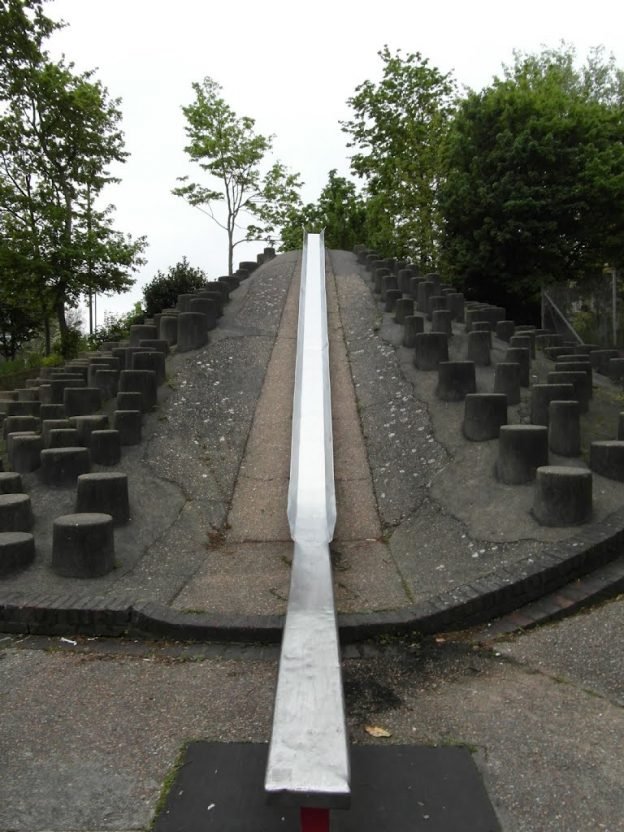
  • “Save Our Slide!” Guest Blog by Adam and Daniel FoxSmith

    “Save Our Slide!” Guest Blog by Adam and Daniel FoxSmith

    This first part of blog from 2014 is by Adam Foxsmith then aged 10 

    We all know that children’s play space is important in a crowded place like Islington. So when my brother Daniel,( aged 6, yr2) and I heard that the Council were planning on taking down the Archway slide, we felt we had to do something about it.
    There was a consultation, but we discovered that both options involved taking down the slide!
    So, Daniel and I put together a question for the Council meeting, as reported in the Islington Tribune HERE
    At the meeting, Daniel asked the question “Will you save the slide?”, and I asked a supplementary question. The Council said they would think about it!
    We also presented a petition to save the slide.
    We have decided to continue the petition, to see how many more signatures are gathered. The Council is still considering what to do, as reported HERE

    20140329-172443.jpg

    This part of the blog is by Daniel Foxsmith (now aged 10) in 2017

    I am very happy that the Council has improved the park. It is great to have the slide back and I am glad that we saved it. I have tested the slide and can confirm that it as good as before or maybe better! 👍

    Slide re-opening covered by Islington Tribune here

    Notes

    The park-including revamped slide was re-opened on September 30th 2017

    7BB041AF-6A74-4982-9FB1-EB41E3432E34 33AF3AC2-EDAB-487B-BF8A-E344E6BCA6DA19660121-D17D-4741-B250-EB3FDAA5D3F9 82E8172E-00F6-4EFA-B61A-4806338923E3

  • Protecting Children Services in Islington

    UPDATE:-My amendments to the Budget were unsuccessful, and the cuts to Children Services have gone through, with Labour Councillors voting instead to keep their press officers, support officers, and allowances (with the Lib Dems abstaining)
    Coverage in islington Tribune here

    November 2015-shock rise in crime in Islington reported.

    Original Post from 27 February:-
    At Islington Council’s Budget Meeting tonight, the Council is potentially going to make a grave error with its proposed drastic cuts in children’s services.
    The Council has of course been unfairly hit by disproportionate and draconian funding cuts from central Government, and there are inevitably difficult decisions to make.
    However, targeting posts in Children’s Services is making the axe fall in the wrong place, and potentially putting vulnerable children at risk.
    In my amendment, I will argue that the cuts should fall instead on the bloated Communications budget (currently running at about £1million per year), and on Councillors own allowances.
    When Labour took control in Islington in 2010, they had pledged to “slash” expenditure on both communications spending and allowances. Now they can fulfil that pledge, and protect a front-line service.

    My budget amendment also provides additional funding for road safety, especially around schools, and preventing bike theft (which is prolific in Islington)
    Detail
    I’m trying to stop the Councils proposed slashing of jobs in children’s services. (See appendix B esp items 3,4 and 7) In nearly £4million of proposed cuts, there are six senior posts and a management post being deleted amongst staffing reduction.
    I will protect these posts by instead:
    -abolishing party political spin doctors
    -abolishing the Councils propaganda magazine “Islington Life”
    -reducing the Councils million pound Communications budget by about a third
    -reducing Councillor allowances by 10% (to follow the example of Council Leader Richard Watts)
    (I will follow Cllr Watts Leadership, and take a 10% reduction in allowances, whatever the outcome of the budget amendment)
    -abolishing “special allowances” for chairing planning meetings.

    My amendment also provides funding for an air quality strategy to tackle killer pollution levels.

    Finally, my amendment also provides some additional funding for the Advice Alliance- there help for vulnerable people needed more than ever with Coalition attacks on welfare and the needy.
    (Also topical, with today’s announcement by Grayling killing off Criminal Legal Aid)